Getting Over It with Bennett Foddy: A Deep Dive into Digital Masochism and Unexpected Triumph
Ever hurled your controller across the room in a fit of frustrated rage? Spent countless hours inching towards a seemingly impossible goal, only to watch your progress evaporate in a digital blink? Then you're starting to understand the peculiar allure of Getting Over It with Bennett Foddy. This isn't just a game; it's a cultural phenomenon, a testament to the human desire to overcome seemingly insurmountable odds, and a surprisingly insightful commentary on perseverance. This article delves into the game's frustrating yet rewarding mechanics, its vibrant online community, its surprisingly profound philosophical underpinnings, and its unexpected cultural impact, revealing why this deceptively simple climbing game has captivated millions. For those seeking alternative ways to experience the game, check out this modded version.
Gameplay: A Hilarious, Agonizing Climb
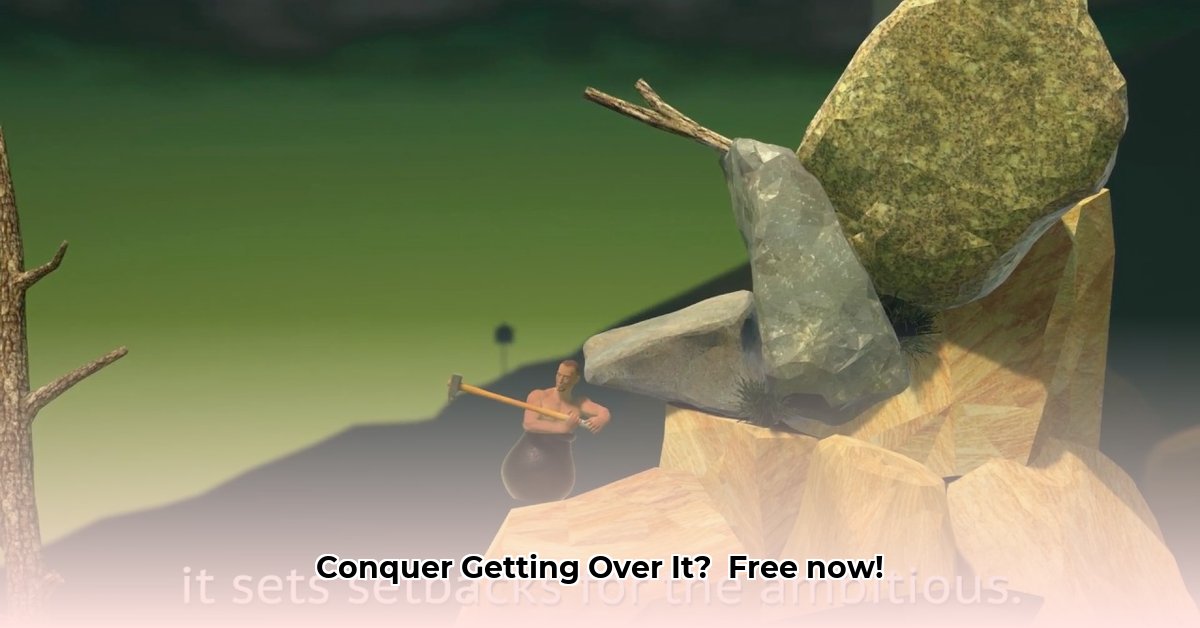
The controls are deceptively simple: you control a lone figure in a pot, wielding a hammer to propel yourself upward. Sounds easy, right? Wrong. One misjudged swing, one tiny slip, and it's back to the bottom of the impossibly steep, bizarre mountain. Hours of painstaking progress can vanish in seconds, sending you into a digital tailspin of expletives and self-recrimination. Yet, paradoxically, this very frustration fuels the game's addictive quality. Each incremental victory, each hard-won inch of progress, becomes incredibly satisfying. It's a journey of constant setbacks and small triumphs, a brutal yet oddly rewarding experience. "The frustration is real, but the feeling of finally achieving something after so much effort is immensely satisfying," says Sarah Miller, a gaming journalist at Polygon.
The Community: A Brotherhood (and Sisterhood) of Shared Struggle
The online community surrounding Getting Over It is as unique as the game itself. Players share their hilarious failures, near misses, and ultimate victories, creating a space of mutual support and shared understanding. This isn't just about beating the game; it’s about the shared experience of the struggle. Screenshots aren't simply images, they are digital badges of honor, celebrating perseverance in the face of seemingly endless setbacks. This shared experience creates a surprisingly supportive environment where players celebrate each other's achievements, fostering a sense of community that transcends the game's inherent frustration.
| Community Platform | Interaction Style | Examples |
|---|---|---|
| Forums for tips, strategy discussions, sharing funny moments | Threads dedicated to hilarious wipeouts, detailed strategy discussions and community-created art. | |
| Discord | Live chat, help, encouragement | Real-time assistance, encouragement, and advice from other players. |
| YouTube | Let's Plays, speedruns, commentary | Videos documenting the struggles, triumphs, and the sheer comedic value of the game's difficulty. |
The Philosophy: A Digital Reflection of Life's Trials
Bennett Foddy, the game's creator, didn't just design a game; he crafted a philosophical experience. Getting Over It isn't solely about reaching the summit; it's about the journey itself, the persistent struggle, the inevitable setbacks, and the enduring will to keep trying. The relentless difficulty isn't a flaw; it's a deliberate metaphor for life's unpredictable nature, emphasizing the importance of resilience and the iterative nature of overcoming obstacles. "The game is a microcosm of life's struggles," observes Dr. David Johnson, Professor of Philosophy at the University of California, Berkeley. "It forces players to confront their own limits and to find creative solutions to overcome them".
Cultural Impact: A Meme-Making Machine
Getting Over It's viral success is undeniable, fueled by YouTubers and streamers who broadcast their emotional rollercoaster to millions. It became a meme machine, a symbol of both agonizing frustration and exhilarating triumph. The game's intense emotional responses and the resulting online conversations significantly contributed to its widespread popularity and cemented its place in the gaming zeitgeist. Isn’t it fascinating how a game built on frustration captivated so many?
Should You Play? A Final Verdict
Getting Over It isn't for the faint of heart. It's a test of patience, a trial of perseverance, and a journey into the depths of your own capacity for frustration. But, if you're willing to embrace the pain, laugh at your failures, and savor the small victories, you'll find a game that's both uniquely challenging and profoundly rewarding. It’s an unforgettable experience that might just teach you something about yourself, your resilience and the ability to pick yourself up after repeated failures.
⭐⭐⭐⭐☆ (4.8)
Download via Link 1
Download via Link 2
Last updated: Friday, May 16, 2025